
Free Resources
We have created a library of practical guides and infographics to help caregivers, educators, clinicians, and professionals better understand and navigate reactive attachment disorder. These resources are free to access — just sign up with your email to get started.
These materials are the intellectual property of RAD Advocates and may not be modified. You are welcome to share them for personal use, such as in parent groups or with your child’s educators or doctors. For other uses or larger audiences, please email info@radadvocates.org.
Already a member or email subscriber? Log in here to access your forum and the Resources Library.
What's in the Library
-
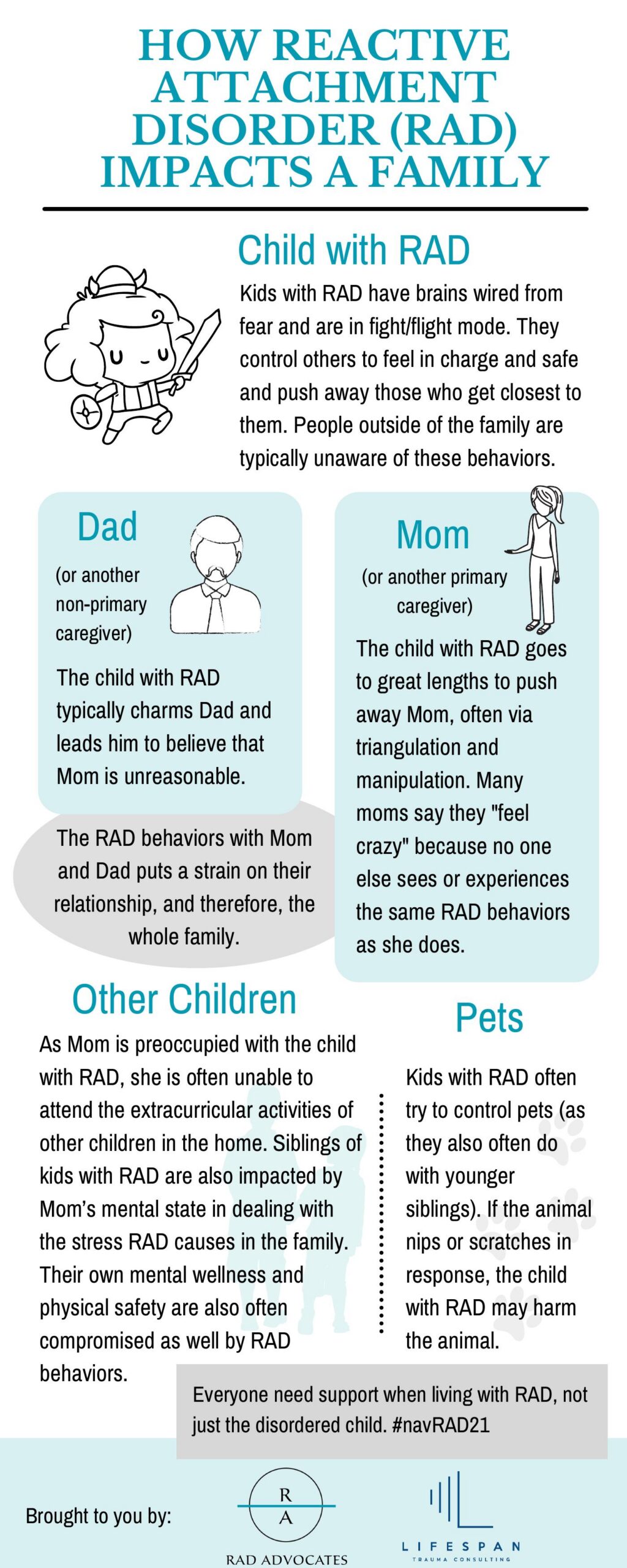
How RAD Impacts a Family
A one-page picture of what the disorder does to each person in the house — the child, both caregivers, the siblings, even the pets. The one to hand someone who thinks it is only about the child.
-
4 Steps to Take During a Crisis
What to do, and what to have ready beforehand, if your child poses a danger to themselves or someone else.
-
Responding to an Unfounded CPS Investigation
Practical steps for staying calm, credible and professional when a caseworker questions your parenting.
-
RAD Clinician Checklist
Eight qualities to look for in a therapist, and the red flags that say you have the wrong one.
-
An Educator's Guide to Reactive Attachment Disorder
For teachers and school staff: what RAD is, why traditional classroom management does not work, and what does.
-
An Educator's Guide to Students with Traumatic Backgrounds
The broader classroom picture — what trauma does to a developing brain and what you may notice in a student.
-
How to Give Respite Care for a Child with RAD
For the grandparent, friend or respite worker stepping in: how to keep the child safe without undermining the family.
-
Bipolar Disorder and RAD: New Findings in Diagnosis
Dr John F. Alston on why attention deficit disorder is over-diagnosed in this population, and what he found instead.
Sign up above and we'll send you access to every one of these, along with anything we add later.